Imagine building a fully functional app, launching a website, or even starting an online business simply by describing your idea in plain English. This isn't a futuristic fantasy, it's the reality of no-code development in September 2026. The world of software creation has moved beyond complex coding, giving power to innovators everywhere. By this year, Gartner projects that a staggering 70% of new applications will use low-code or no-code technologies, a significant leap that shows just how central these tools have become.
This isn't just about making things easier. It's about fundamental change. The demand for automation is soaring, skilled developer shortages persist, and businesses need incredible agility. No-code tools meet these challenges head-on, empowering a new class of "citizen developers" to create robust solutions without writing a single line of code. The market reflects this shift, with global no-code development platforms expected to hit around $52 billion by 2026, showing a nearly 28% compound annual growth rate (CAGR).
The No-Code Boom: Mainstream by 2026
No-code platforms are no longer just for experiments. They are now a mainstream approach for building applications. This growth is driven by a clear need for speed, efficiency, and broader access to technology creation. Varsha Mehta, a senior market research specialist at Gartner, points out that low-code technologies help companies achieve the digital literacy needed in modern, agile environments.
Consider the numbers: 77% of enterprises now use low-code or no-code tools, a big jump from 65% just two years ago in 2024. In large companies, 38% had adopted no-code solutions by early 2026, and this figure continues to climb rapidly. Financial services lead the way with 82% adoption, followed closely by healthcare at 74% (integrate.io).
This widespread adoption isn't just about buzz. It delivers real, measurable results. Organizations report up to a 90% reduction in development time with no-code platforms, compressing work that used to take months into mere weeks or days (kissflow.com). Companies using no-code workflow automation have seen an average 65-70% reduction in process cycle time. These aren't minor improvements, they are transformational.
The global no-code development platform market is booming, projected to reach $52 billion by 2026 (thebusinessresearchcompany.com). The broader low-code market is expected to reach an impressive $101.7 billion by 2030 (integrate.io). These figures paint a clear picture: no-code is not just here to stay, it is rapidly becoming the standard for innovative development.
Citizen Developers: The New Architects of Innovation
One of the most profound shifts driven by no-code is the rise of the citizen developer. These are non-technical professionals who can now build functional applications. By 2026, experts predict that 80% of technology products and services will be built by non-developers (integrate.io). This marks a monumental change in how we think about who creates technology.
In enterprises that have formally adopted no-code platforms, citizen developers now outnumber professional developers by approximately 4:1. This statistic is powerful. It means that the bottleneck of relying solely on IT departments is being removed, freeing up internal talent to solve problems and create value directly (integrate.io).
This democratization of development has immense practical implications. More individuals within organizations can now build solutions, which reduces reliance on traditional IT departments and accelerates innovation across the board. Imagine marketing teams building landing pages, HR departments creating onboarding tools, or sales teams customizing CRM extensions, all without needing a developer.
Platforms like TashiOS are at the forefront of this movement. They allow users to describe their ideas in plain English and then build real apps, websites, online stores, and Android apps. This approach truly empowers anyone with an idea to become a creator, closing the gap between concept and execution.
AI and No-Code: The Intelligent Partnership
The single most significant development in the no-code space over late 2025 and early 2026 is the deep integration of AI into no-code tools. These platforms have evolved into intelligent assistants, turning natural language descriptions into functional software. This is prompt-based creation taken to a whole new level.
Tools like Atoms, Bubble, and Adalo are now using AI to generate app layouts, logic, and even entire functional products from text prompts (adalo.com, buildez.ai). You can describe the app you want in simple sentences, and the AI does the heavy lifting, translating your vision into a working application. This is a massive leap forward in efficiency and accessibility.
The no-code AI platform market itself is experiencing explosive growth. It's expected to grow from $8.6 billion in 2026 to over $75 billion by 2034 (marktechpost.com). This segment alone highlights the transformative power of combining AI with no-code principles.
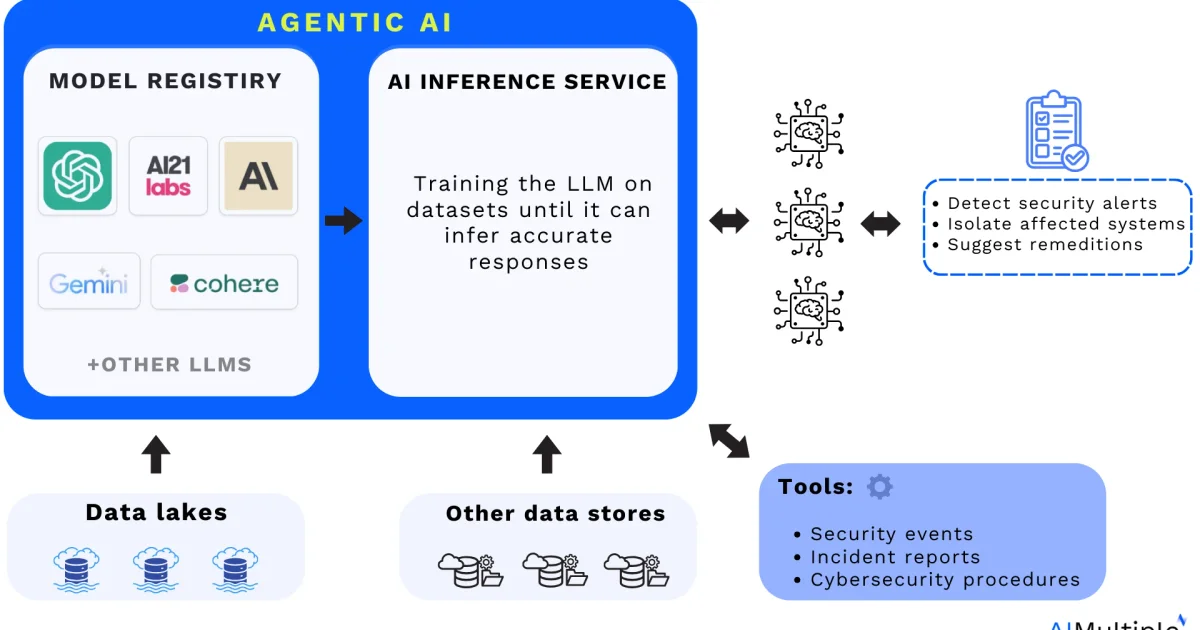
Beyond simple generation, agentic AI is also making its mark. No-code agent builders are production-ready in 2026. Platforms like SimplAI offer visual multi-agent workflows and extensive data integrations. Anthropic's Claude Fable 5.1 and Mythos 5.1, released in September 2026, further advance agentic capabilities for coding and knowledge work (claude.com, anthropic.com). This means AI can not only build components but also orchestrate complex workflows and intelligent agents.
Enterprise Adoption: Speed, Savings, and Strategy
For businesses, the move to no-code and AI-powered development is a strategic imperative. The benefits are clear and compelling. First, there's the incredible agility and speed. Businesses can respond to market changes and internal needs much faster by rapidly deploying custom applications and automations. This means staying competitive in a fast-paced world.
Then there are the significant cost savings. Reduced development time and the ability to use existing staff to build solutions lead to substantial cost efficiencies. Companies can cut development costs by up to 70% with low-code platforms (ninox.com). For example, organizations that replaced legacy systems with low-code platforms, such as Ricoh, have reported a 253% ROI with a payback period of just 7 months (hostinger.com).
This shift also allows IT teams to focus on more complex, high-value projects. By offloading routine application development to citizen developers, IT professionals can dedicate their expertise to strategic initiatives, innovation, and maintaining critical infrastructure. This optimizes resource allocation and drives overall business growth.
Microsoft's recent moves underscore this enterprise commitment. Starting in September 2026, Microsoft's Dynamics 365, Power Platform, and Dataverse roadmap content is consolidating into the 'AI at Work' roadmap. This unification provides a single destination for upcoming capabilities, clearly signaling Microsoft's dedication to deeply integrating AI into its low-code offerings (microsoft.com). This shows that major players see AI-powered no-code as central to future enterprise solutions.
Recent Milestones: Big Tech and Agentic AI
September 2026 has been a busy month for no-code and AI, with several key announcements shaping the future. Anthropic's release of Claude Fable 5.1 and Claude Mythos 5.1 significantly enhances capabilities for agentic coding, knowledge work, and research. These updates also include optimized pricing for prompt cache reads, making advanced AI more accessible for development tasks (anthropic.com).
Another notable event was ServiceNow's acquisition of Sweep in September 2026. Sweep developed a no-code Salesforce configuration tool and an 'agentic workspace.' This acquisition highlights the increasing value of no-code solutions for enterprise automation and AI integration, particularly in complex CRM environments (salesforcedevops.net).
These developments show that the industry is moving quickly. The convergence of AI and no-code is not just a theoretical concept; it's being implemented and acquired by major technology companies. This validates the power and potential of these combined approaches for solving real-world business problems.
The Future is No-Code: Predictions and Practical Steps
The future of no-code is undeniably linked with AI. We can expect platforms to continue evolving into intelligent assistants, capable of generating sophisticated applications from increasingly simple prompts. The ability to articulate an idea and have AI construct it will become even more seamless.
However, it's important to have a realistic view. While 70-80% of business workflows can now be built with no-code, experts caution that the remaining 20% may still require low-code or traditional development support (integrate.io). No-code is powerful, but it's not a magic bullet for every single edge case. It shines brightest for rapid development and automation of common business processes.
A key buying criterion for low-code platforms in 2026 is their ability to provide 'guardrails.' These are robust governance, versioning, and security features that ensure citizen-developed applications are reliable and compliant (tooljet.com). As more people build, the need for centralized control and security becomes paramount. Platforms like TashiOS focus on providing these essential guardrails, ensuring that innovation doesn't come at the cost of security or compliance.
The impact of no-code on various industries is profound. Financial services and healthcare are already leading adoption, but every sector stands to gain from increased agility, reduced costs, and the ability to empower their workforce to build solutions. This shift means more innovation, faster problem-solving, and a more responsive business environment overall.
We are truly in an era where technology creation is democratized. The tools are here, the market is growing, and the future is being built, piece by no-code piece, by everyone with an idea.
Ready to turn your ideas into reality? With TashiOS you can describe what you want to build in plain English and launch your own apps, websites, online stores, and Android apps. Start for free today with AI credits and join the no-code revolution.